Pregnancy Intelligence
Structured monitoring from positive pregnancy test to healthy baby
Pregnancy Intelligence is one of the core projects of High Coast Health Intelligence Institute.
It focuses on structured monitoring during early pregnancy, especially for women who want closer follow-up after IVF, previous miscarriage, endometriosis, bleeding episodes or high concern.
Early pregnancy can be a period of uncertainty.
Many women need more structure than standard care can always provide, especially when there is a previous history of loss, fertility treatment, symptoms or anxiety around development.
Pregnancy Intelligence is built to support this space.
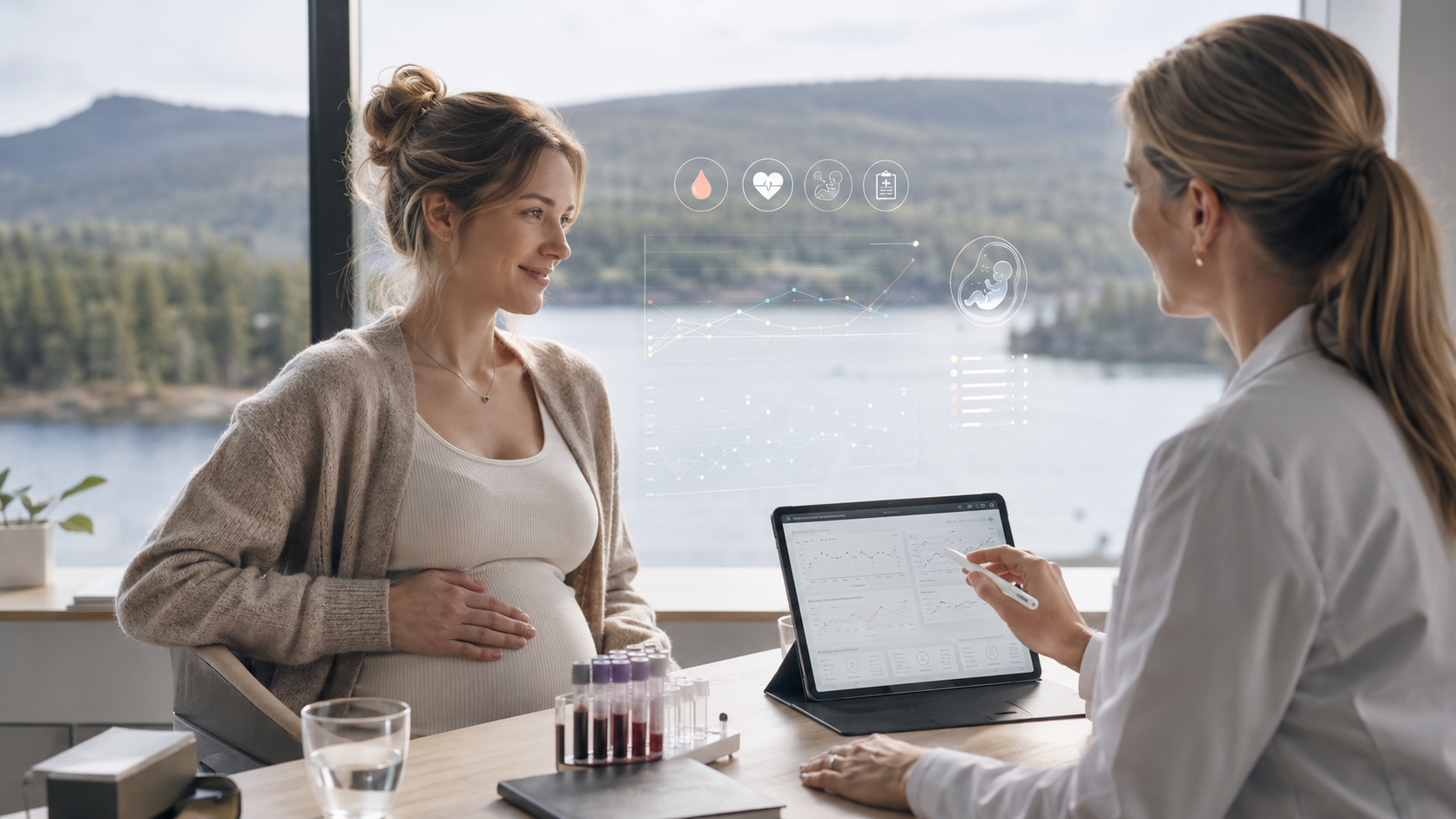
It combines blood tests, symptom tracking, trend analysis, trigger-event response, AI-supported interpretation and human expertise when needed.
The goal is simple:
from positive pregnancy test to healthy baby.

Why early pregnancy needs intelligence
Early pregnancy is biologically dynamic.
Hormones change rapidly. Symptoms may appear, disappear or shift. Bleeding can be frightening. Previous experiences can increase concern. IVF can create a strong need for close follow-up. Some women feel reassured by structured information, while others are left uncertain between appointments.
A single test result can be useful.
But early pregnancy often requires context.
- What week is it?
- What was the previous value?
- How fast is the trend changing?
- Are symptoms changing?
- Has there been bleeding?
- Is there IVF history?
- Has there been previous miscarriage?
- What should be followed next?
- When should healthcare be contacted?
Pregnancy Intelligence is designed to organize these questions into a clearer monitoring pathway.
A structured monitoring program
Pregnancy Intelligence is not a replacement for maternity care, emergency care or medical responsibility.
It is a structured monitoring program that can support women during a sensitive period where closer follow-up may be valuable.
The program can combine:
- blood tests, symptom tracking, trend analysis
- trigger-event response
- AI-supported interpretation
- human expertise when needed
- follow-up over time
The purpose is to create more clarity, not false certainty.
No program can remove all pregnancy risk.
But a structured program can help women understand what is being followed, what patterns may be reassuring, what changes need attention and when a next step may be needed.
Blood tests and biomarkers
Blood tests are a central part of Pregnancy Intelligence.
In early pregnancy, biomarkers such as hCG and progesterone may provide useful information when interpreted in the right context.
A single value may say something. A trend may say more.
Pregnancy Intelligence focuses on structured tracking rather than isolated numbers.
The key questions are:
- What was measured?
- When was it measured?
- How does the value compare with previous results?
- Is the trend expected?
- Does it match the pregnancy timeline?
- Does it match symptoms or events?
- Should the test be repeated?
Is expert review needed?
The goal is not to overtest. The goal is to use testing meaningfully when closer monitoring is wanted or needed.
Symptom tracking
Symptoms matter.
Nausea, fatigue, breast tenderness, cramping, bleeding, pain, dizziness, anxiety and other changes can all influence how a woman experiences early pregnancy.
But symptoms can also be difficult to interpret.
- Some symptoms are common.
- Some symptoms change naturally.
- Some symptoms may create concern.
- Some symptoms should trigger medical contact.
Pregnancy Intelligence connects symptom tracking with timing, blood test trends and personal history.
This creates a more structured view of what is happening over time.
The purpose is not to turn every symptom into alarm.
The purpose is to create context.
IVF and previous miscarriage support
Pregnancy after IVF or previous miscarriage can be emotionally intense.
A positive pregnancy test may bring joy, but also fear.
Women in this situation often want closer follow-up because they know what uncertainty can feel like.
Pregnancy Intelligence is especially relevant for women with:
- previous miscarriage
- recurrent pregnancy loss
- IVF treatment
- fertility treatment history
- endometriosis
- bleeding episodes
- early pregnancy concern
- high anxiety or high need for reassurance
The program can provide structure around testing, symptom tracking, follow-up timing and interpretation.
The aim is to support a more informed and less fragmented experience.
Bleeding episode response
Bleeding in early pregnancy is one of the most common reasons for concern.
It can have different causes and different levels of significance.
Pregnancy Intelligence cannot diagnose the cause of bleeding remotely, and it should not replace urgent care when medical assessment is needed.
But it can help structure what happens around a bleeding episode.
A trigger-event response may include:
- recording the timing and character of the bleeding
- tracking associated symptoms
- reviewing previous biomarker trends
- identifying whether healthcare contact is needed
- planning repeat testing when appropriate
- documenting follow-up
- involving human expertise when needed
The value is structure. A frightening event becomes part of a clearer pathway.
AI-supported interpretation
Pregnancy data can quickly become complex.
AI-supported interpretation can help organize information and prepare clearer summaries.
It can help connect:
- pregnancy week
- test dates
- hCG trends, progesterone values, symptom reports, bleeding episodes
- IVF history, previous miscarriage history
- follow-up plans
AI can support trend analysis, pattern recognition and prioritization.
But AI should not create false certainty or replace clinical judgment.
Pregnancy decisions are sensitive.
That is why Pregnancy Intelligence combines AI-supported structure with human expertise and clear medical boundaries.
Human expertise when needed
Human expertise is central to Pregnancy Intelligence.
Some situations are simple and may only need structured monitoring.
Other situations are uncertain, emotional or medically sensitive.
In these cases, human expertise can help interpret patterns, explain findings, guide next steps and clarify when regular healthcare or urgent care should be contacted.
The program should support women, not leave them alone with complex data.
AI can organize information.
Human expertise gives context, caution and responsibility.
From concern to clarity
Many women enter early pregnancy with concern.
Concern after previous loss.
Concern after IVF.
Concern after bleeding.
Concern after symptoms change.
Concern because the pregnancy is deeply wanted.
Pregnancy Intelligence is designed to help move from concern to clarity.
Clarity does not mean certainty.
It means knowing what is being followed, what the available information suggests, what the next step is and when medical contact is appropriate.
This is the practical purpose of the project.
A project within the Institute
Pregnancy Intelligence is one project within High Coast Health Intelligence Institute.
It uses the same model as the Institute’s other projects:
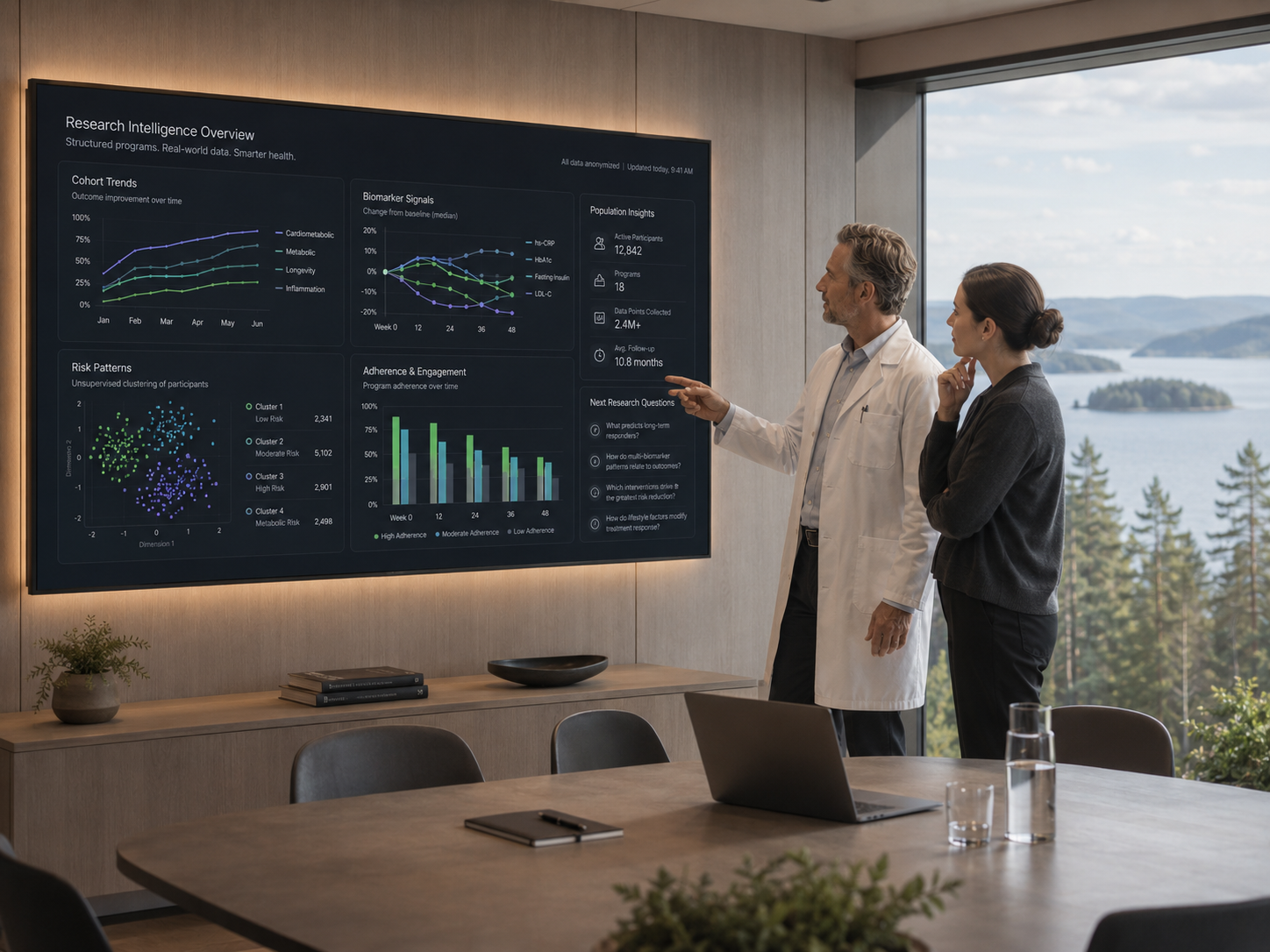
human need -> diagnostics and data -> AI intelligence layer-> expert network -> actionable health decisions -> better outcomes and new knowledge
What makes Pregnancy Intelligence specific is its focus on early pregnancy monitoring, blood test trends, symptoms, trigger events and structured support during a sensitive period.
The Institute provides the shared health intelligence platform.
Pregnancy Intelligence applies that platform to one of the most important human journeys.
Research and learning
Pregnancy Intelligence can also contribute to responsible research and learning over time.
When data is collected with consent, privacy and care, structured monitoring can help identify patterns that may improve future support.
Important questions may include:
Which symptom patterns create the most concern?
Which biomarker trends are most useful in context?
Which trigger events need faster response?
Which women benefit most from closer monitoring?
How can communication reduce uncertainty without creating false reassurance?
How can AI support structure while keeping human expertise central?
The goal is to improve the monitoring pathway over time.
Each program should support the individual today while helping build better models for tomorrow.
The core idea
Pregnancy Intelligence is a structured approach to early pregnancy monitoring.
It connects blood tests, symptoms, timing, personal history, AI-supported interpretation, human expertise and follow-up.
The purpose is not to promise certainty.
The purpose is to provide structure, context and better-supported decisions during a period where many women need closer guidance.
From positive pregnancy test to healthy baby.