
Future Project Areas
Expanding health intelligence into new human health needs
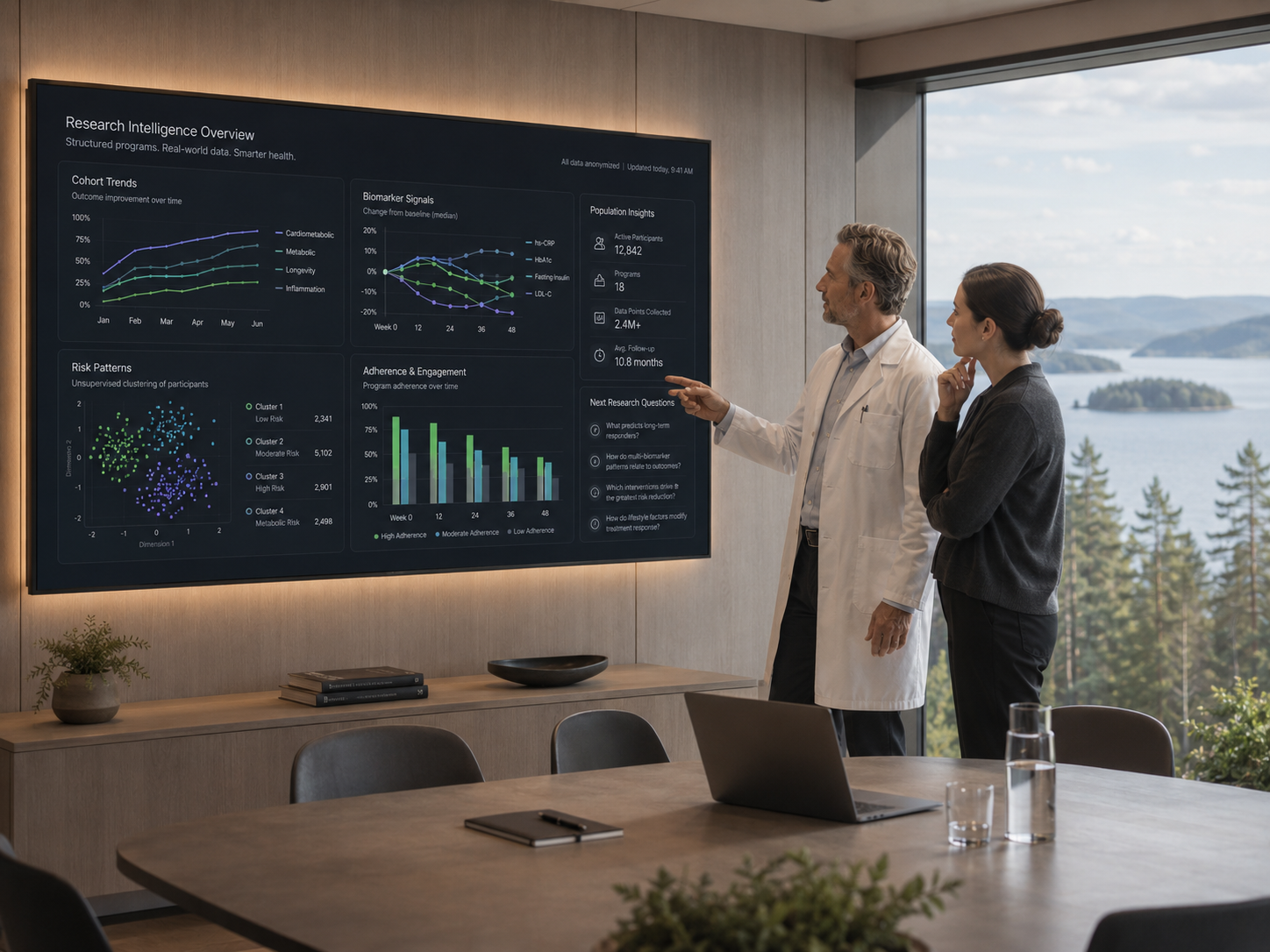
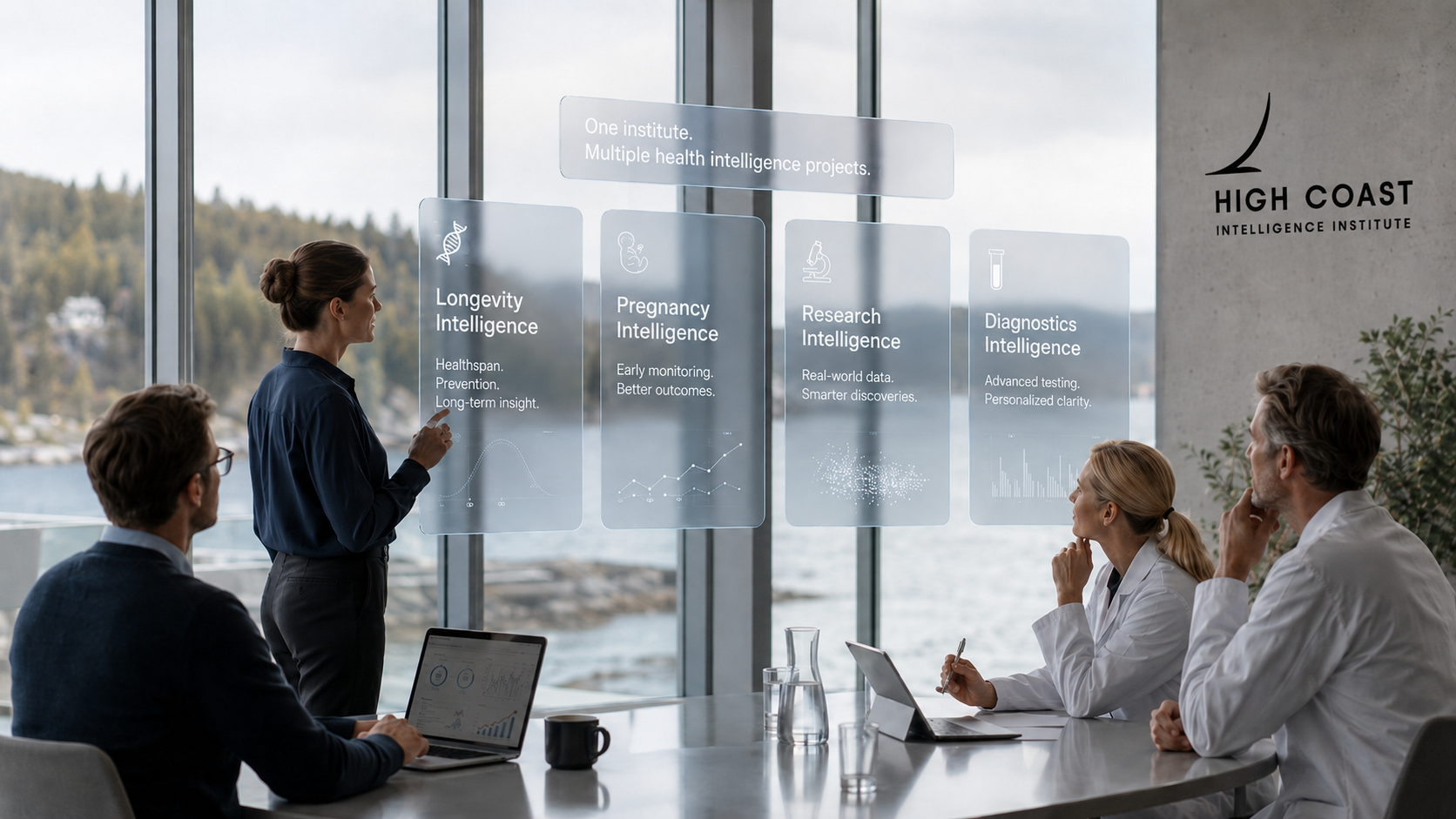
High Coast Health Intelligence Institute is built as a platform for multiple health intelligence projects.
The first core project areas include Longevity Intelligence, Pregnancy Intelligence, Research Intelligence and Diagnostics Intelligence.
But the Institute model is designed to grow.
The same structure can be applied to several future health areas where better diagnostics, monitoring, interpretation, expert guidance and follow-up are needed.
Future Project Areas represent the next layer of development.
They are not all fully launched programs today.
They are areas where the Institute may develop new projects, partner collaborations, diagnostic pathways, research models and practical health products over time.
A shared model for future projects
Each future project area can use the same health intelligence model:
human need
diagnostics and data
AI intelligence layer
expert network
actionable health decisions
better outcomes and new knowledge
The specific health questions may differ.
Women’s health is not the same as metabolic health.
Recovery and performance are not the same as cardiovascular prevention.
Cognitive health is not the same as inflammation and immune health.
But the underlying need is similar:
people need better ways to understand biological change, follow meaningful signals and make decisions that can improve health over time.
This is where the Institute model can be reused and expanded.
Why future project areas matter
Health problems rarely exist in isolation.
Pregnancy, longevity, metabolism, inflammation, cardiovascular health, recovery, performance and cognition are connected through biology.
A person’s long-term health may depend on several systems working together.
Inflammation may influence metabolic health.
Metabolic health may influence cardiovascular risk.
Hormones may influence energy, fertility, pregnancy, recovery and cognition.
Sleep and recovery may influence inflammation, mood, performance and long-term resilience.
Because these systems overlap, the Institute should not be locked into one narrow project.
Future Project Areas allow the platform to grow around real human needs and real biological connections.
Women’s health
Women’s health is one of the most important future development areas.
Pregnancy Intelligence is already one focused project within women’s health, but the broader field is much larger.
Future women’s health work may include:
fertility and reproductive health
hormonal patterns
menstrual cycle intelligence
endometriosis-related monitoring
perimenopause and menopause
postpartum recovery
women’s metabolic health
long-term preventive health for women
Women’s health often requires more structured monitoring, better interpretation of symptoms and hormones, and stronger connection between lived experience and biological data.
This makes it a natural future area for health intelligence.
Metabolic health
Metabolic health is central to long-term prevention.
It influences energy, weight regulation, inflammation, cardiovascular risk, hormonal function, liver health and long-term disease risk.
A future Metabolic Health Intelligence project could focus on:
glucose regulation
insulin resistance
lipid metabolism
liver markers
body composition
nutrition patterns
activity and recovery
longitudinal biomarker tracking
The goal would not be generic diet advice.
The goal would be to connect diagnostics, symptoms, lifestyle context and follow-up into a clearer metabolic health pathway.
Metabolic health is one of the strongest areas for practical, measurable prevention.
Inflammation and immune health
Inflammation is involved in many health conditions and long-term risk patterns.
But inflammation is also complex.
It can be acute or chronic.
It can be protective or harmful.
It can be connected to infection, autoimmune activity, metabolic dysfunction, stress, recovery, lifestyle, gut health or other underlying processes.
A future Inflammation and Immune Health project could help structure questions such as:
Which inflammatory markers are changing?
Is the pattern temporary or persistent?
Does it connect with symptoms?
Does it relate to metabolic health, recovery or other risk factors?
What should be followed over time?
When is medical evaluation needed?
This area needs careful interpretation and strong clinical boundaries.
That makes it highly suitable for an expert-supported health intelligence model.
Cardiovascular prevention
Cardiovascular disease is one of the most important long-term health challenges.
Many risk factors develop gradually and can be measured before major events occur.
A future Cardiovascular Prevention project could connect:
lipid markers
ApoB and other advanced cardiovascular markers
blood pressure
metabolic health
inflammation
body composition
activity and recovery
family history
lifestyle factors
long-term follow-up
The purpose would be to help people understand cardiovascular risk earlier and more clearly.
Not only through single values, but through a structured view of risk patterns, priorities and preventive actions.
Cardiovascular prevention is one of the clearest examples of where better diagnostics and better decisions can matter over time.
Recovery and performance
Recovery and performance are not only relevant for athletes.
They matter for anyone who wants to function well over time.
Poor recovery can affect sleep, energy, mood, immune function, metabolic health, hormonal balance, cognition and long-term resilience.
A future Recovery and Performance project could include:
sleep and recovery tracking
stress physiology
training load and adaptation
fatigue patterns
nutritional status
inflammation
heart rate variability
subjective energy and performance
follow-up after interventions
The aim would be to connect measurable signals with lived experience.
This could support both preventive health and higher performance, depending on the person’s goals.
Cognitive health
Cognitive health is a growing future need.
Many people want to preserve memory, focus, emotional stability and mental performance over time.
Cognitive health is influenced by several systems:
sleep
metabolic health
vascular health
inflammation
hormonal balance
stress
nutrition
physical activity
social and environmental factors
A future Cognitive Health Intelligence project could explore how these signals can be monitored and interpreted in a structured way.
The goal would not be simplistic brain optimization.
The goal would be to understand cognitive health as part of the whole biological system.
How future areas may develop
Future Project Areas may develop in several ways.
Some may become full project verticals like Longevity Intelligence or Pregnancy Intelligence.
Some may become program tracks inside existing projects.
Some may become diagnostic panels.
Some may become research collaborations.
Some may become partner-led products.
Some may begin as articles, white papers or pilot programs before becoming larger platforms.
The Institute does not need to launch everything at once.
The important thing is to build each area with the same discipline:
start with a real human need
measure what matters
interpret in context
involve the right expertise
support action
follow outcomes
learn over time
Partner opportunities
Future Project Areas are also important for partnerships.
Different partners may bring different capabilities:
clinical expertise
laboratory testing
research models
AI and software tools
wearable technologies
nutrition and lifestyle programs
digital monitoring platforms
product development
hospitality and program delivery
investment and regional support
The Institute can serve as a platform where these capabilities are organized around real health needs.
A future project should not begin with technology alone.
It should begin with a problem worth solving.
From future areas to real products
The goal of future project development is practical.
The Institute is not only interested in ideas.
It is interested in building useful health products, programs and decision systems.
A future project area may lead to:
a diagnostic pathway
a digital monitoring program
a structured health program
a research dataset
an AI-supported interpretation model
a partner product
an educational platform
a retreat or experience format
a clinical decision support tool
This is how future project areas can move from concept to impact.
A careful development approach
Not every future area should become a product immediately.
Health intelligence must be developed carefully.
Some areas require more research.
Some require clinical validation.
Some require strong ethical governance.
Some require partners.
Some require better data before clear models can be built.
The Institute’s approach should therefore be ambitious but careful.
Future Project Areas represent opportunity, not overclaiming.
They show where the platform can grow, while keeping responsibility at the center.
The core idea
Future Project Areas show how High Coast Health Intelligence Institute can expand over time.
The first projects create the foundation.
Future areas allow the Institute to apply the same model to new health needs.
Women’s health.
Metabolic health.
Inflammation and immune health.
Cardiovascular prevention.
Recovery and performance.
Cognitive health.
Each area may become a project, program, diagnostic pathway, research collaboration or product platform.
The long-term goal is the same:
better knowledge, better decisions and better lives.